
HISTORY
"The Passage of Time."
History of Light Therapy
The peoples of ancient Egypt, Greece and India practiced light therapy by utilizing sunlight to help improve their health and wellness. (Mandel, 1986) They were so convinced that sunlight possessed healing properties that they built tall buildings with large openings in the walls to let the sunlight in. They would often hang dyed cloth or gems to filter the sunlight coming into the different rooms manipulating the colour and intensity of the sunlight. These rooms were then used for those recovering from wounds received in great battles to those suffering from malaise.
Luminaries in the Field of Light Therapy
Dr. Niels Ryberg Finsen introduced ultraviolet light as a treatment for tuberculosis, as a significant contribution to medicine for that era. In 1903, Dr. Finsen was awarded the Nobel Prize in Physiology of Medicine in recognition of his contribution to the treatment of diseases, especially lupus vulgaris, with concentrated light radiation, whereby he opened a new field of medical science. Dr. Finsen is considered the modern-day father of phototherapy.
Dr. Harry R. Spitler
In the 1920s, Spitler discovered that light and colour, delivered through the eyes, played a key role in controlling biological development and function. He concluded that many systemic, mental, emotional and visual ailments were due to imbalances in the autonomic nervous and endocrine systems. Harry Spitler developed Syntonics, an alternative therapy, which is used by “mainstream” optometrists.
Dr. Paul Nogier was a neurologist, known as the “father” of Auriculotherapy. Nogier is credited with determining that all tissues and organs in the body are in resonance with specific frequencies of the musical note “D” and that the harmonics of “D” have healing effects. “By repeatedly exposing damaged tissue to their normal embryonic frequencies associated with that tissue, healing often occurs, sometimes quite rapidly.”
Dr. Fritz Popp
In 1974, Dr. Fritz Popp confirmed the existence of biophotons; photons of light that transmit information within and between cells, and originate with the DNA. Dr. Popp founded the International Institute of which is a network of 19 research groups in 13 countries involved in bio-photon research and coherence-systems in biology.
Dr. Harry Whelan is a professor of neurology at the Medical College of Wisconsin. In 1999, Dr. Whelan was involved in studies and trials involving LED lights utilized to reduce pain, to promote faster healing and help treat cancer (NASA News, Lyndon B. Johnson Space Center, Release H99111.) In 2003, Dr. Whelan was cited in the Marshall Space Flight Center News Release, “Light emitting diodes bring relief to young cancer patients; …, As part of a team who discovered that bright (LED) light was effective in greatly reducing or preventing painful and devastating mucositis problems in patients undergoing chemotherapy.” Dr. Whelan explained, “The use of light as a natural form of energy from nature activates the normal biochemistry of the cell so that the cell tends to take from it what it needs…”
Dr. Karu from the Laser Technology Center in Russia (affiliated with the University of California at Berkeley), is possibly the world’s top researcher on the use of lasers and light emitting diodes (LEDs). Dr. Karu published a study in which she discusses photobiological stimulation without laser light. The article explains that one can do laser treatments by using light emitting diodes, which are much safer, instead of lasers. Dr. Karu has been quoted as saying, “The primary changes induced by light are followed by a cascade of biochemical reactions in the cell that do not need further light activation… light finds just the right places in the body to heal… starving or oxygen deprived tissue responds to the irradiation but not healthy tissue. Wounded, chronically inflamed, and ischemic cells are characterized by their acidic, hypoxic and inhibited state. Light drives them (the cells) toward oxidation, balanced pH and vitality.”
Dr. Jacob Liberman is a Fellow Emeritus of the American academy of Optometry. He is the recipient of the H.R. Spitler Award for his pioneering contributions to the field of phototherapy. Dr. Liberman has written a landmark book, “Light: Medicine of the Future,” in which he integrates scientific research, clinical experience and his own insights. In this book he discusses significant discoveries, researchers, milestones and uses of light in the treatment of various cancers, depression, stress, visual problems, PMS, sexual dysfunctions, learning disabilities and the human immune system.
The concept of light being a particle or a wave has been, and is still today, highly controversial among scientists. The controversy is fueled by the fact that in some ways light behaves like a wave. However, in other ways, light behaves like a stream of particles. During the 20th century, physicists came to believe that light could be both a particle and a wave leading us to the term, “wave particle duality“.
Light is such a complex topic that the great physicist, Richard Feynman, dedicated a lengthy series of lectures titled “Quantum electrodynamics,” to that topic. In these lectures he expounds upon lights numerous elements, traits, effects and benefits. His summation was that light is a complex resource that is not yet fully understood.
As complex as light is to explain, there are a number of things we do know. Light, in particular sunlight, offers heat - a visible and invisible spectrum and energy. We also understand that sunlight is paramount to our planet’s existence. Vegetation, insects, warm and cold blooded animals all need sunlight. The sun, in
Prominent Users of Light Therapy


Around 1900 AD
A patient is treated for Lupus using Heliotherapy. Approx. 1900
Light therapy transitioned from direct sunlight to the use of filtered sunlight and artificial light sources (I.e. fluorescent tubes and carbon-arc, quartz lamps, etc.). Early applications of light for therapeutic purposes included treatment of skin diseases, ulcers, syphilis, lupus, pellagra, wound healing, and tuberculosis.
NASA Space Technology Shines Light on Healing
(Release December 18, 2000)
“Dr. Whelan’s NASA-funded research has already seen remarkable results using the light-emitting diodes to promote healing of painful mouth ulcers caused by cancer therapies such as radiation and chemotherapy. The treatment is quick and painless.”
“The red light penetrates to the inside of the mouth, where it seems to promote wound healing and prevent further sores in the patient’s mouth.”
“They reported a 40 percent improvement in patients who had musculoskeletal training injuries treated with the light-emitting diodes.”
Current Studies and Uses of LED Light Therapy
Plants grown on the International Space Station
NASA, through the space program, prompted renewed interest in light therapy. Due to the lack of gravity that keeps cells from growing naturally in outer space, NASA used LEDs to enhance the growth of plant tissue. The plants grew, and – by coincidence – numerous zero-gravity induced symptoms found in the astronauts (i.e. loss of bone mass, atrophied muscles, unhealed wounds, etc.) were also reduced.
“NASA scientists have found that cells exposed to near-infrared light from LEDs, which is energy just outside the visible range, grow 150 to 200 percent faster than cells not stimulated by such light. The light arrays increase energy (ATP and nitric oxide) that speed up the healing process.” – NASA Press Release on LED Technology
“In addition to NASA, this technology has been used by both physicians and Navy Seals for muscle regeneration and the healing of wounds. The Navy Seals’ program found the return-to-service rate was 41% faster with LED light therapy. Additionally, many institutions such as John Hopkins, Stanford, and the Mayo Clinic have studied and used LEDs for various healing benefits.” – NASA Press Release on LED Technology
The Significant of Nitric Oxide on LED Light Therapy
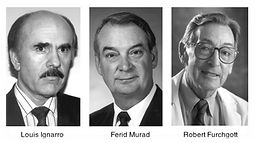
Nitric oxide was named “Molecule of the Year” in 1992 by the journal ‘Science’ (aka Science Magazine), but it took another 6 years for those responsible for this major discovery to win the Nobel Peace Prize. Three US scientists – Robert Furchgott, PhD, Louis Ignarro, PhD., and Ferid Murad, MD – received the 1998 Nobel Prize for Physiology and Medicine.
Their research concluded that infrared photo energy stimulates nitric oxide from the hemoglobin and possibly from the surrounding tissue. Nitric oxide is a signaling molecule that is known to relax smooth muscle cells found in the arteries, veins, capillaries, and lymph vessels. When these muscles relax, they dilate blood vessels, thus allowing increased circulation. Nitric oxide has also been shown to be essential for wound healing, even if chronic or traumatic.
Nitric oxide is a chemical involved in many normal body functions and disease processes. Besides being a strong dilator of the blood vessels (which allows an increased blood flow), it is known to promote immune system function and wound healing. It is particularly useful because it is difficult for bacteria to develop resistance against it. Nitric oxide attacks a range of targets in bacteria, including DNA, cell wall lipids, proteins and enzymes. In order for bacteria to develop resistance, it would have to change at each of those attack sites.
“LED light therapy provides infrared photo energy to help facilitate the many benefits described above and many others.” – Drs. Furchgott, Ignarro, Murad and Burke
Make Your Own History with LED Light Therapy
The historical documentation is amazingly clear and resoundingly obvious: Photo-Bio-Modulation works. Start making your own history – and let us know how we can help.